by Yasuhiro Suzuki, MD, PhD, JA (Zürich, 2008)
CST-T, Prof. Bukkyo University
On detachments
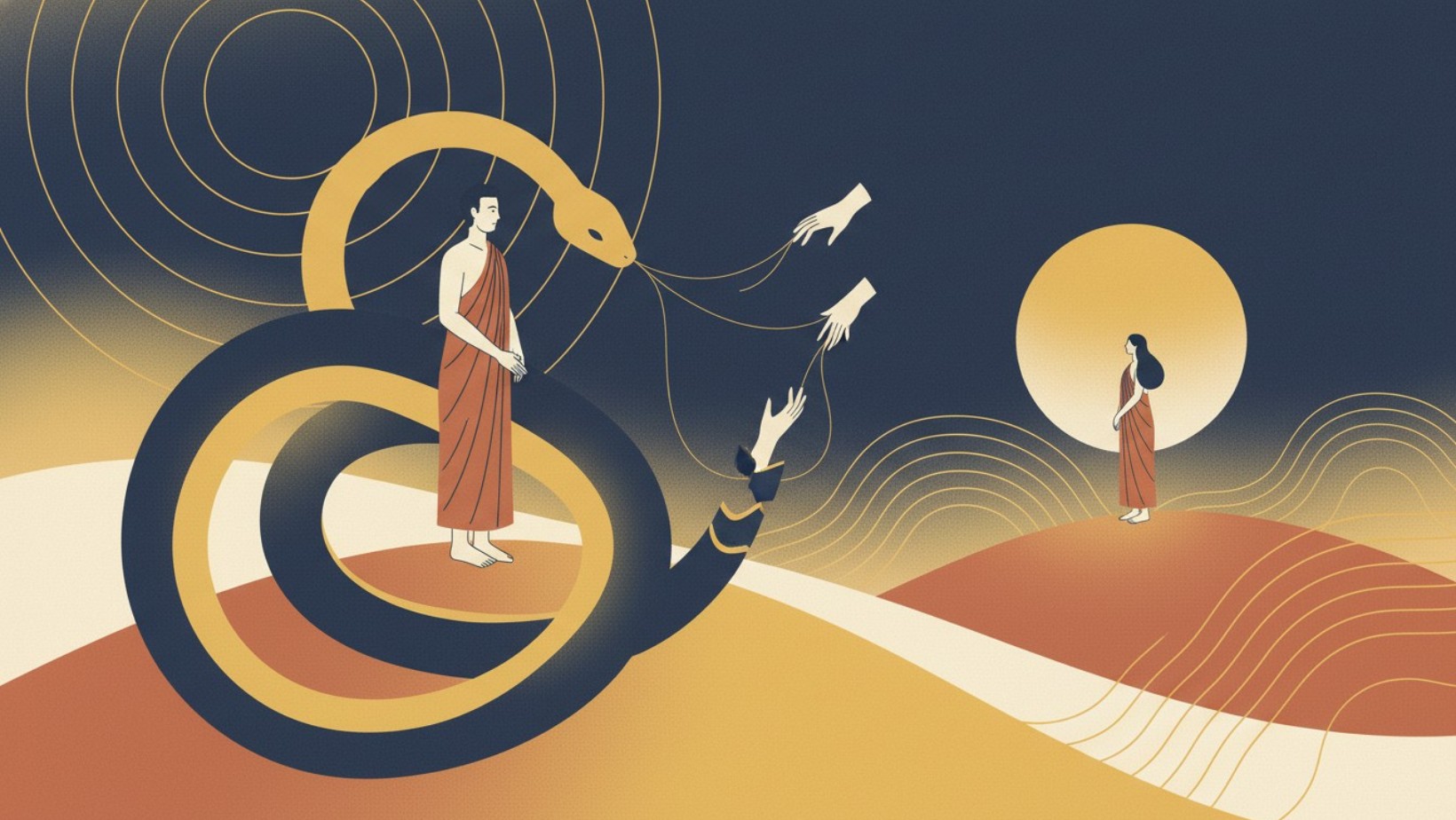
On the contrary of detachment, “attachment” (J. Bowlby) is the key concept in Psychotherapy. “Good enough” attachment (between infant/baby and mother/parents) is necessary like good enough mothering (D.W. Winnicott), basic trust (E.H. Erikson) and to internalize absent mother towards object constancy at rapprochement phase (M. Mahler). I would like to refer to “too much” attachment here from the Viewpoints of Buddhism. It is named 執着-upādāna; clinging/grasping/attachment. According to the Paticca-samuppāda sutra (縁起), the one’s clinging /grasping/attachment (執着 – upādāna) unfolds as follows: the desire for love (渇愛 – taņhā) is repeated and becomes customary, leading to attachment. This attachment takes on a patterned form and becomes a complex (有 – bhava). We must begin to gaze at (Virāga) and observe the complex, the constellation of scenes, Archetypes, and Collective Unconscious in which the attachment is patterned (Inoue 2022). By reflection on the fact that ignorance (無明 – avijjā/avidyā) shaped our past actions (業/行 – sañkhāra), we can see that our worldly existence (生存/有 – bhava) is created through the desire for love (渇愛), and through clinging, grasping, and attachment (執着). We may then begin to witness (‘gaze at’ – Virāga) this desire and attachment vanishing. This is the stage of ‘letting go,’ in which wisdom (智慧 – paññā) paves the way for a new space of kind thoughtfulness (Inoue 2005, p141). In other words, regarding above, Jung (1939/1954, para. 797) describes the process as follows: “the problem is not so much a withdrawal from the objects of desire, as a more detached attitude to desire as such, no matter what its object. We cannot compel unconscious compensation through the impetuousness of uncontrolled desire. We have to wait patiently to see whether it will come of its own accord, and put up with whatever form it takes. Hence, we are forced into a sort of contemplative attitude which, in itself, not rarely has a liberating and healing effect.” This is the meeting point where Eastern Buddhism and Western Jungian psychology are integrated through the concepts on detachment and attachment.
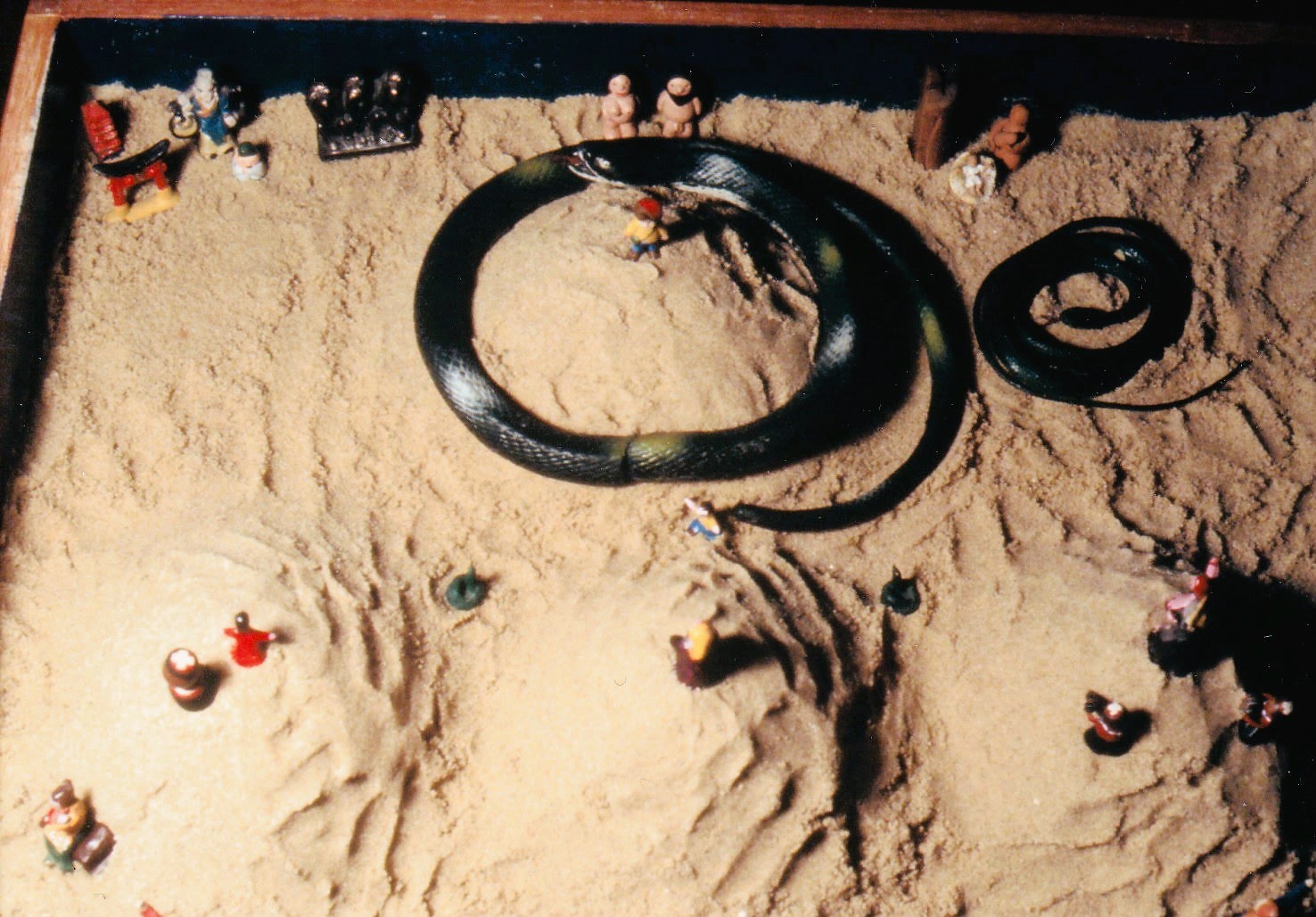
I will show a clinical example of the integration between detachment and attachment as follows: A male client is on the hill surrounded by the large snake and the woman on the top of the middle hill at the bottom (front) looking towards him is his lover. He conflicted with her. But he finds out that the tails of the snake are detached and he attaches the detached tails. The large snake, which used to be buried, has appeared but it may no longer be scary. Strongly instinctive things such as life and death, poison and medicine are fairly domesticated and tamed and are used in a positive direction; he is facing the woman. Not to mention the tail that the snake lost has been reattached. In contrast, it seems to be protecting and accompanying him. He is face to face with his lover.
By attaching the detached tail, he is healed and can face her. This is also the meeting point where detachment and attachment are integrated, in a clinical sense.
References
- Inoue V. (2005), Ānāpānasati-Sutta, Tokyo: Kousei Shuppansha
- Inoue V. (2022), Private letter
- Jung C.G. (1939/1954/1958), ‘Psychological Commentary on «The Tibetan Book of the Great Liberation ‘. In Collected Works, Vol.11, Psychology and Religion: West and East (2nd ed.). Princeton, NJ: Princeton University Press
- Suzuki Y. (2023), Bardo, Noh plays and Zeitgeist in Japan: getting through the COVID-19 pandemic and the Ukraine crisis. In E. Brodersen (Ed.) Jungian Dimensions of the Mourning Process, Burial Rituals and Access to the Land of the Dead: Intimations of Immortality. London: Routledge, 101-112.